SASHA DUBOVIK
I build Bubble applications — from early-stage products to existing systems that need to grow.Before anything gets built, I think through priorities, user flows, and data structure. Every step is deliberate — what goes into the first version, what waits, and why.I work best with clients and product managers who are genuinely involved in that process.
I believe good collaboration starts with trust — the ability to talk openly about what makes sense, question what doesn't, and make better decisions together at every step.
Experience highlights:
3.5+ years
20+ projects, including long-term engagements up to 12 months
Mostly direct/referral clients — building Upwork track record now
5-star reviews on all rated contracts on Upwork
Experience across SaaS, marketplaces, healthcare, education, and internal business systems
Worked both in agency / team environments and as a solo developer
Core stack:
Bubble (backend / frontend, UX) Senior level
API integrations (REST, auth, webhooks)
Stripe (subscriptions, marketplaces, raw API logic)
Custom analytics (GA4, GTM, structured events)
Custom code (HTML, CSS, JavaScript — charts, embeds, data processing and optimization)
Automation & integrations (n8n, Make etc)
AI integrations (Claude, OpenAI)
client feedback and recent work
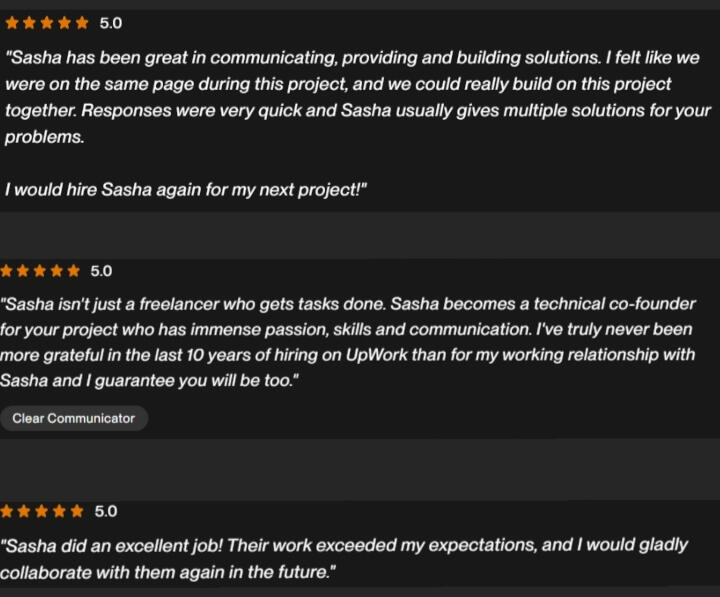
Verified Upwork reviews · Top Rated Plus profileMost of my recent work is under NDA and cannot be shared publicly.
These projects involve production systems with real users, complex logic, and ongoing evolution.Domains: healthcare · education · multi-role SaaS platforms
The case studies below are public projects or simplified examples that demonstrate my approach to architecture, decision-making, and product complexity.
The Credos
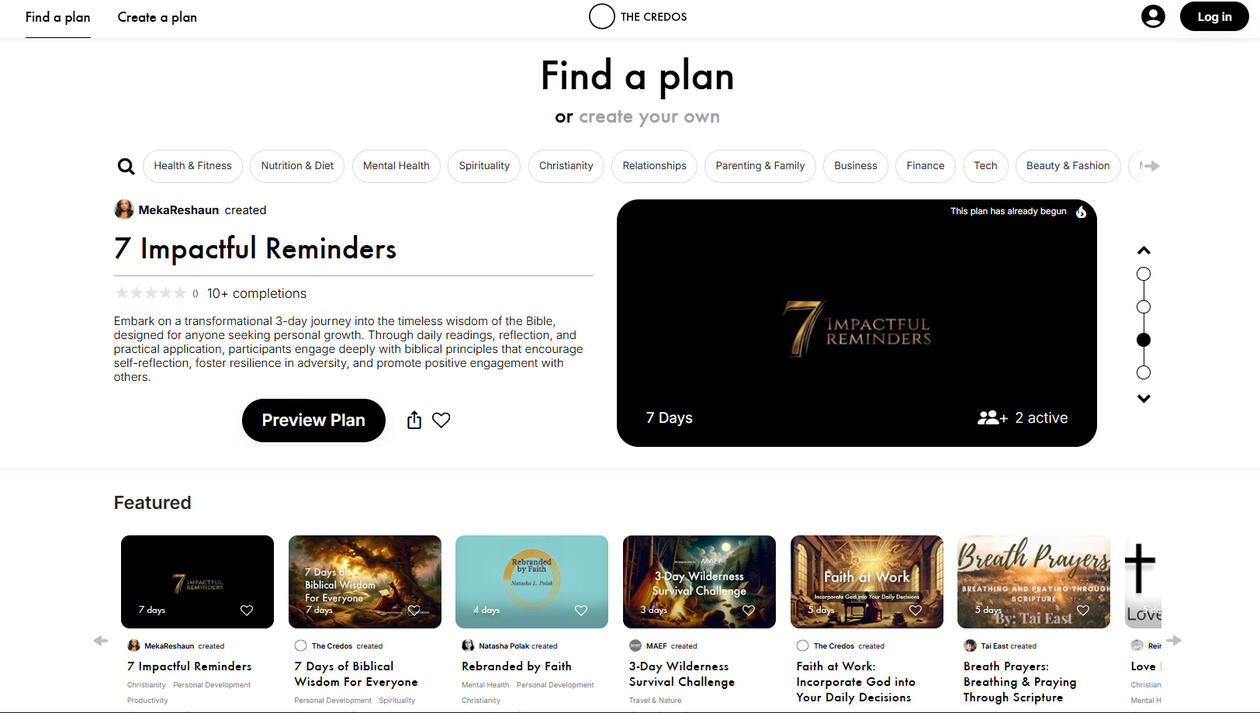
The Credos is a faith-based platform built to support structured, subscription-based journeys created by independent authors and consumed by participants.My role:
I built the platform from scratch in Bubble and was responsible for its architecture, core workflows, and product logic from the initial implementation onward.Project evolution:
I worked on the project across multiple phases — from the first functional version to a significantly expanded system with growing feature complexity.What I focused on:• Designing a multi-role architecture (participants vs creators) with distinct permissions
• Implementing and comparing two monetization approaches via Stripe: raw API/webhooks vs plugin-based flows
• Building subscription and trial logic that could evolve without breaking existing users
• Integrating external services via API, including Daily (video meetings) and Postmark (transactional email), while keeping workflows predictable and maintainable
• Making UX decisions that aligned with technical constraints and content structureOutcome & learnings:
This work required adapting to evolving requirements and a growing feature set over time.It strengthened my approach to building systems that can adapt to change, and reinforced the importance of architectural clarity when products move beyond their initial scope.The project was live for a year. The client has since closed it, but the app is still accessible — note that data creation may be limited due to an inactive Bubble plan. All architecture, features, and logic are intact.
Carview
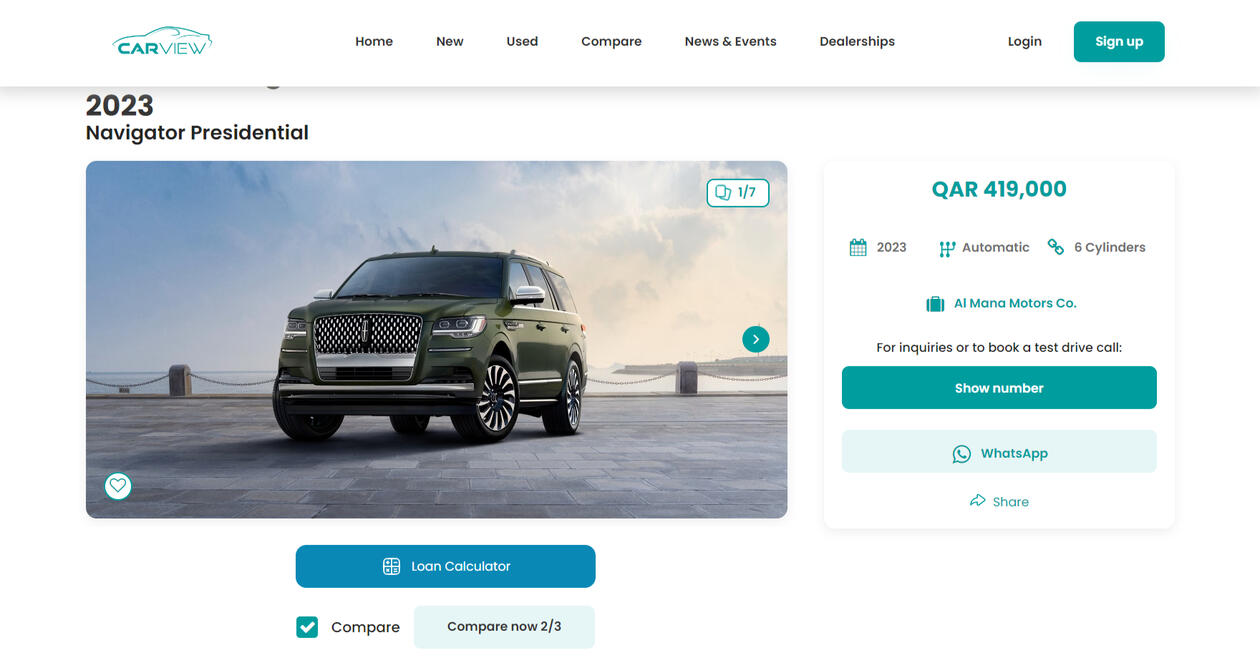
Carview is a web platform designed for car dealerships to manage vehicle listings, comparisons, and customer interactions in a structured way.My role:
This was my first solo product built from scratch. I designed the initial UX structure, implemented the full Bubble application, and worked closely with a professional designer to refine the final interface.Design approach:
I started with UX wireframes based on reference products and client preferences, focusing on clarity and comparison-heavy flows.
The final visual layer was refined together with a professional designer.Data & performance considerations:
Vehicle entities contained a large number of attributes, but only a subset was required in most views.To keep pages responsive, I introduced lightweight data types and separated listing-level data from full vehicle records, reducing load and improving page performance.Technical highlights:• Role-based access for dealers and users• CSV-based inventory import• Advanced brand–model search and filtering• Stripe payments and Postmark email automationOutcome & learnings:
While the platform did not evolve into a large-scale production product, it became a foundational project for my approach to UX-driven system design, data structuring, and building scalable Bubble architectures from scratch.
Deallly
Deallly is a matchmaking platform connecting startups and investors to streamline discovery, filtering, and funding-related interactions.My role & contribution:
I joined the project to extend and stabilize the backend, focusing on onboarding flows, matching logic, and automation-heavy workflows for investors and startups.What I worked on:
• Designed and implemented a dynamic onboarding system for both investors and startups, supporting role-specific data collection and access rules.
• Built advanced filtering and matching logic, allowing investors to discover startups based on structured criteria and preferences.
• Engineered automated market email workflows, using dynamic arrays to generate personalized investor notifications with newly relevant startups.
• Implemented free vs paid access logic, exposing partial data on the free tier and unlocking full visibility for paid users.
• Contributed to UX decisions around gated content and onboarding clarity, ensuring technical constraints aligned with user experience.Outcome & learnings:
This project strengthened my ability to work inside an existing product, identify fragile backend areas, and introduce scalable automation without disrupting active user flows.
It reinforced my approach to treating matching, onboarding, and notifications as data and system problems, not just UI features.
UX Project
Private Job-Seeker Hub
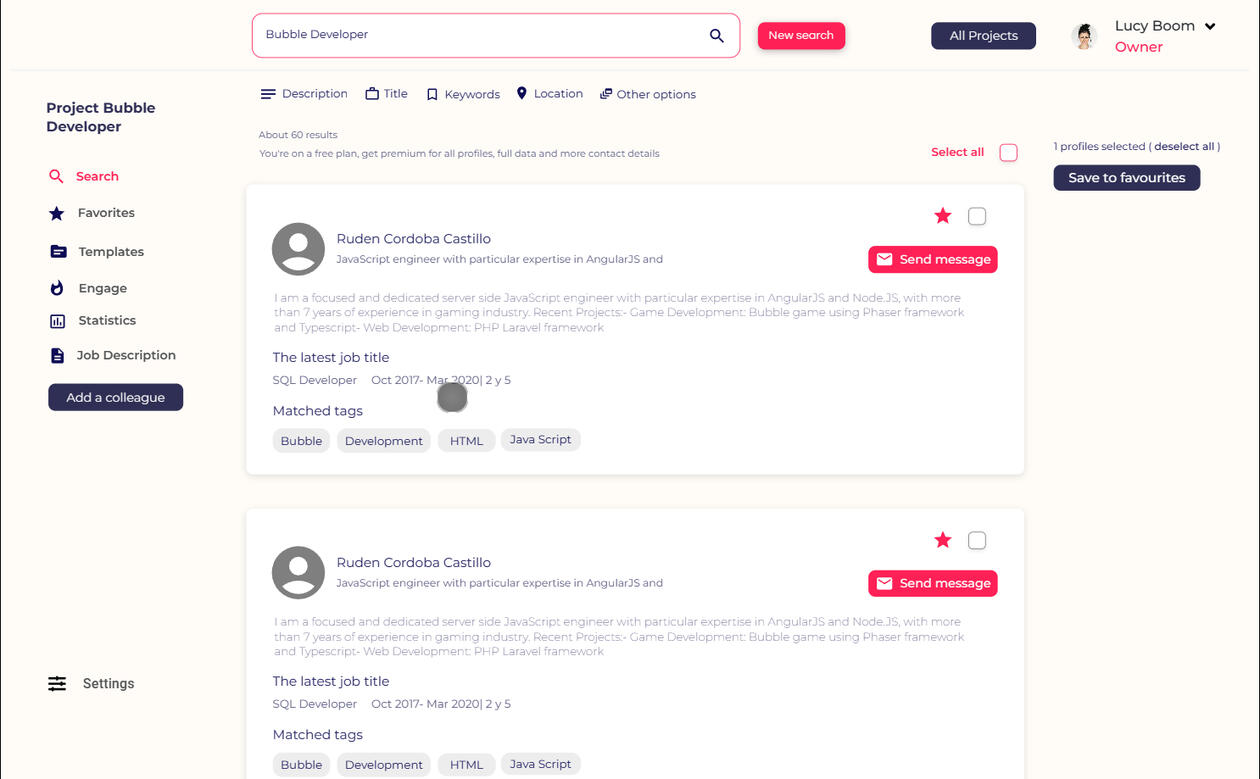
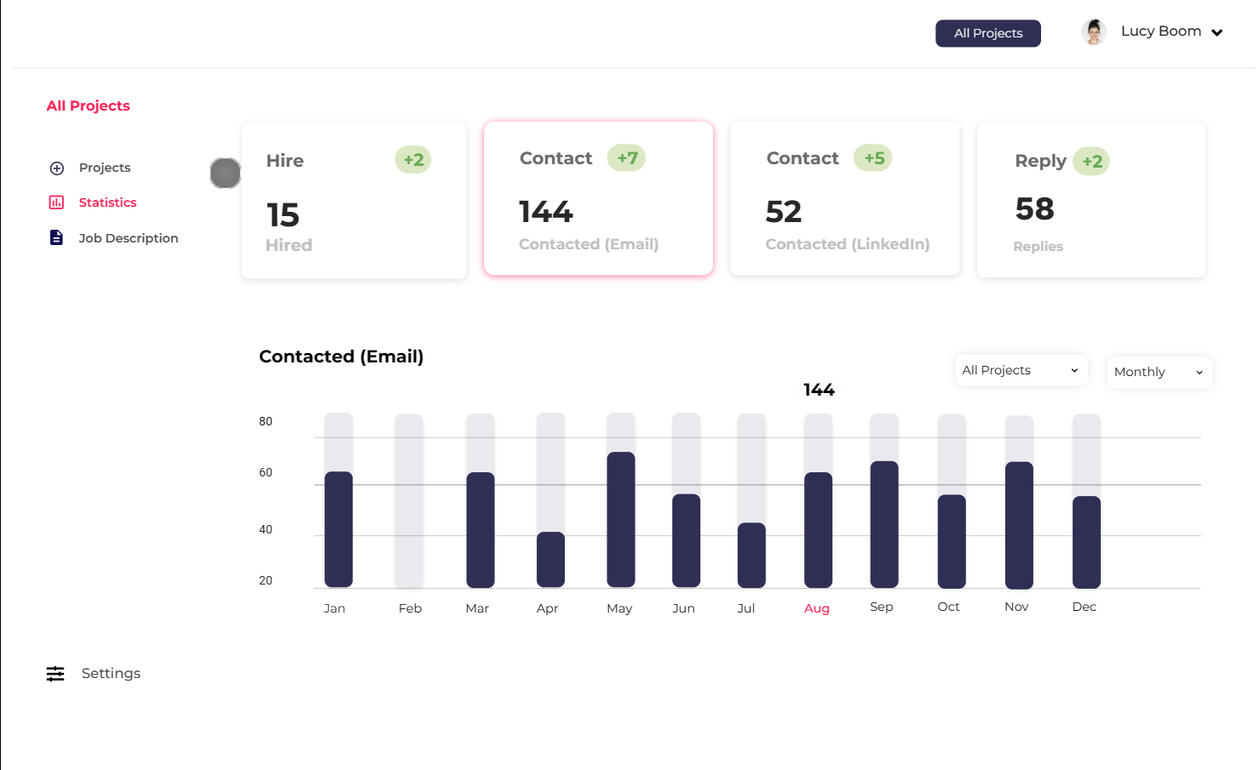
A UX-focused product concept exploring recruiter workflows and AI-assisted candidate search.
My role:
Product & UX strategy (concept stage)What I did:
• Designed end-to-end UX flows for recruiter-centric workflows• Structured search logic and filtering concepts, including AI-assisted discovery• Produced interactive wireframes to validate product assumptions before developmentWhy this matters:
This project strengthened my ability to translate complex product ideas into clear workflows and technical requirements — skills I now apply when building production Bubble apps.
API INTEGRATION —ROOM DESIGNER AI
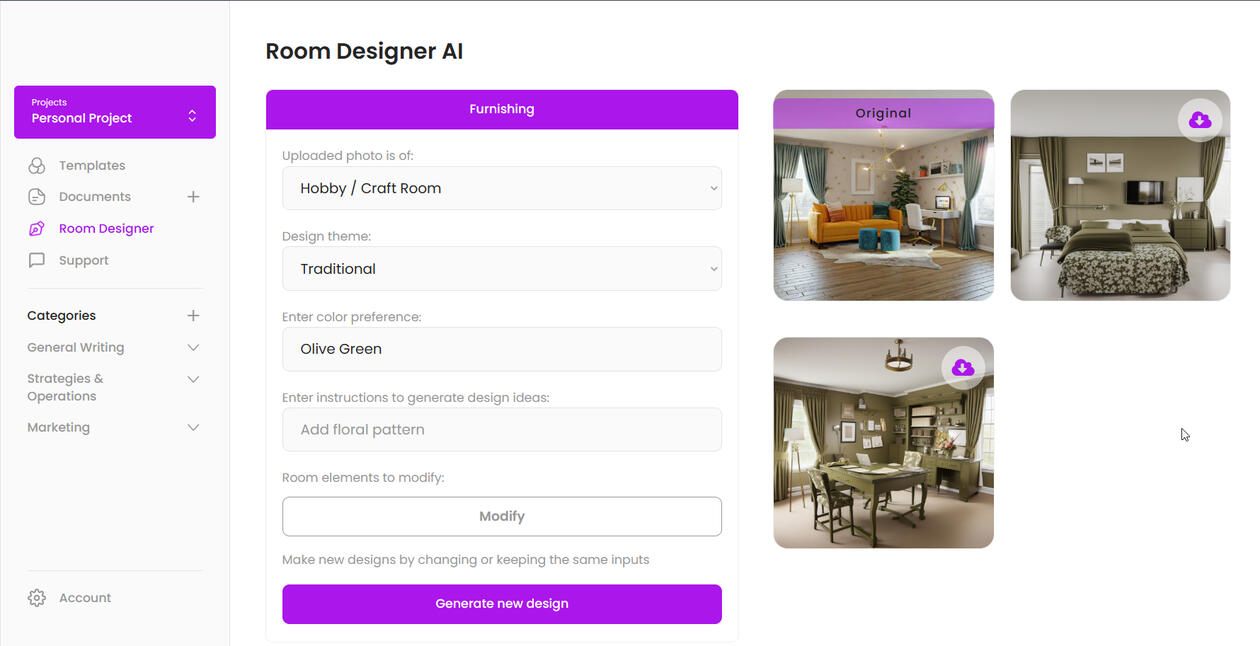
An AI-powered interior design tool that allows users to upload photos of their space, set preferences, and generate AI-enhanced room visualizations through a structured API workflow.My role:
I was responsible for API integration, backend workflows, and UX decisions that made complex AI processes understandable and usable for end users.My work focused on translating abstract AI capabilities into predictable, controllable product flows.What I focused on:
• Integrating ReimagineHome API to enable AI-driven room transformations based on user inputs and images
• Designing API-first workflows with multiple request types, ensuring consistent data handling and clear state transitions
• Building 4 structured API call flows, including request preparation, async processing, and response handling via webhooks
• Implementing AI-based room element detection, allowing targeted modifications instead of full image regeneration
• Introducing multiple generation modes, supporting both architectural and furnishing transformations
• Designing UX that masks backend complexity, making AI interactions feel simple, fast, and predictable for usersOutcome & learnings:
This project strengthened my experience with API-driven product design, where backend constraints directly influence UX decisions.
For more information about my work, feel free to reach out via email: [email protected]
My certificates